

Mangat Copit Plastic Surgery is the longest-established specialty plastic surgery practice in the Vail Valley, with board-certified plastic surgeon Dr. Steven E. Copit bringing over 28 years of experience and a reputation for elegant, natural-looking results.
With thousands of successful procedures performed in our private, state-of-the-art surgical facility, our patients trust us for care that is both artful and safe. So, can eyelid surgery affect your vision? Yes, and in most cases, the effect is a positive one. When excess upper eyelid skin blocks your line of sight, blepharoplasty can reduce or eliminate that obstruction and restore a clearer, wider visual field.
In this blog, we will discuss how eyelid surgery can improve your vision, the potential risks to be aware of, and who makes an ideal candidate.
How Eyelid Surgery Can Improve Your Vision
As we age, the skin around our eyes loses elasticity and begins to droop, a condition known as dermatochalasis. When upper eyelid skin sags far enough, it can physically obstruct your peripheral vision. Upper eyelid blepharoplasty addresses this by removing the redundant tissue that hangs over the visual field.
- Wider visual field: Blepharoplasty restores peripheral vision by lifting excess skin that blocks the upper and outer portions of your sight.
- Improved contrast sensitivity: Studies have found that patients experience a significant increase in contrast sensitivity under both bright and low-light conditions following surgery.
- Reduced eye strain: Removing heavy, sagging skin eliminates the constant effort of raising the brows to see clearly, which can relieve associated tension headaches.
- Enhanced quality of life: Patients report meaningful improvements in self-esteem, emotional well-being, and overall satisfaction after the procedure.
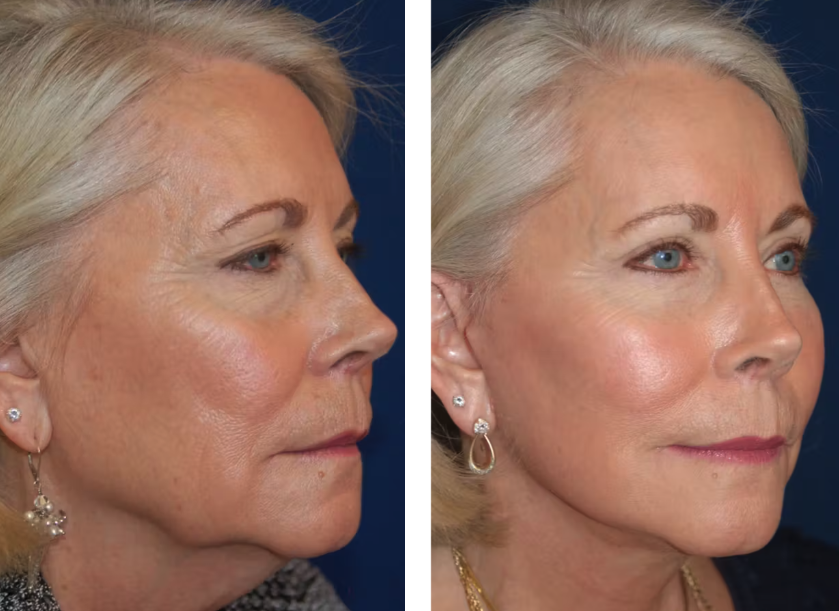
*Real Patient Results: Facelift, upper and lower bleph
Potential Risks to Your Vision
While blepharoplasty is considered safe, understanding the risks is essential. The Mayo Clinic lists the following as rare but possible complications:
- Temporary dry eyes: The most common side effect, though most cases resolve with conservative treatment such as lubricating drops.
- Difficulty closing the eyes: Known as lagophthalmos, this typically resolves within days to weeks as eyelid tissues settle into their new position.
- Temporary blurred vision: Lubricating ointment applied after surgery can cause brief visual disturbance, which clears as healing progresses.
- Rare complications: Infection, scarring, and injury to eye muscles are uncommon, particularly when performed by a board-certified surgeon with meticulous technique.
Who Is an Ideal Candidate?
The best candidates for eyelid surgery are experiencing functional or aesthetic concerns, or both. You may be well-suited for blepharoplasty if you identify with any of the following:
- Drooping upper eyelids: Excess skin that creates a hooded appearance or interferes with clear vision.
- Under-eye puffiness or bags: Persistent fullness beneath the eyes that makes you appear tired, regardless of how rested you feel.
- Good overall health: Non-smokers without uncontrolled conditions such as diabetes or severe dry eye tend to heal most predictably.
- Realistic expectations: You understand that blepharoplasty enhances your natural appearance rather than creating a completely different look.
Take the Next Step with a Surgeon You Can Trust
Eyelid surgery can positively affect your vision, restore a naturally youthful openness to your eyes, and give you renewed confidence, but the quality of your results depends on the expertise of your surgeon.
We invite you to schedule a consultation with Dr. Copit to discuss your goals and experience the world-class, personalized care that sets us apart. Contact us today at 970.414.4322 or visit mangatplasticsurgery.com/contact to book your appointment.